Showing posts with label Hazel Gaynor. Show all posts

Wednesday, October 5, 2016

Hazel Gaynor: The joy of researching historical novels

It is a joy to welcome Hazel back to the RNA blog and to be able to read about her research techniques as well as details of her latest novel.

The idea for my latest novel, THE GIRL FROM THE SAVOY, first developed from a conversation with my editor about our mutual love of the 1920s. I was intrigued by the idea of an ordinary working

girl integrating with the social circles above her. The perfect setting for that to happen was one of London’s iconic hotels of the era, and that working girl became Dolly Lane, a chambermaid. I saw her very clearly and loved developing her story. Dolly is flawed and makes mistakes, but refuses to let go of her hopes for a better life.She is plucky heroine who I hope readers will be rooting for.

Initially, I was undecided between setting the novel in The Ritz or The Savoy. I sent speculative enquiries to both and made contact with Susan Scott, archivist at The Savoy. Susan has worked at The Savoy for over twenty years and what she doesn’t know about the hotel’s history frankly isn’t worth knowing! She was incredibly helpful, giving me some great recommendations for reading about the history of the hotel. Arnold Bennett’s Imperial Palace and Madeleine Grown Up by Mrs. Robert Henrey were invaluable in researching life at the hotel, and in London, in the 1920s. 

After early drafts, and several emails, chapters and months later, I arranged to meet Susan at The Savoy. This meeting happened to coincide with the 2015 RNA summer conference at Queen Mary University. I left the conference for a few hours (did you miss me?!) made my way up West. To sit in the beautiful lobby of The Savoy, talking about my fictional interpretation of hotel in the 1920s was so wonderful. Susan patiently answered all my questions, sharing invaluable knowledge about the hotel’s history - the layout, terminology, famous guests, staff uniforms and routine. She also recommended the lavender eclairs from Melba Patisserie in the Savoy Courtyard, where you can buy the pastries offered at a Savoy afternoon tea. I took two eclairs back to Queen Mary University and sat by the canal with Helen Rolfe where we scoffed those eclairs in the sun before I returned to the conference to deliver a talk on social media.

I’m so glad the setting for my novel turned out to be The Savoy. I learnt so much about the hotel and its guests and it really is the perfect setting for Dolly’s story.

One of my other favourite discoveries during my research was learning about the ‘gallery girls’ of London’s West End theatres: working class girls and women who watched their favourite stars from the cheap seats in the theatre gallery. These women queued for hours at the stage door to get tickets, and many lost shoes, hats and gloves as they raced inside as soon as the doors opened, desperate to get to the best position at front of the gallery. Reports from the time capture the hysteria the gallery girls created, such was their excitement and admiration for the actors and actresses of the era. Dolly
was partly inspired by the gallery girls: after the horrors of war, is it any wonder young women dreamed of a better life – possibly a life on the stage?

The past is such a fascinating place to visit and I hope my readers will enjoy stepping back into the 1920s with my characters Dolly, Loretta, Teddy and Perry, and discovering all the passion and glamour of that mesmerising era.

Links:
Twitter: @HazelGaynor
Facebook: hazelgaynorbooks

Thank you so much Hazel and good luck with The Girl from the Savoy.

If you would like to write for the RNA blog please contact us on elaineeverest@aol.com


Tuesday, June 28, 2016

FOCUS ON: Irish Chapter

What a delight to welcome the newly formed Irish Chapter to the series. Ruth Long was kind enough to answer our questions.

How long has your chapter been running?
Our first ever meeting was on 9th April 2016. We met in the Mint Bar, downstairs in the Westin Hotel on Westmoreland Street, Dublin.

How often do you plan to meet?
We hope to meet quarterly. This is going to be fairly flexible however as we have members from all over the island and would like to accommodate as many as possible.

Where is your regular meeting place?
For the same reason, we hope to meet in different locations. Rather than make the same people travel the longest distances all the time, we’d like to mix things up a bit. Also there is the fun of visiting different places to see friends.

How many members attend your meetings?
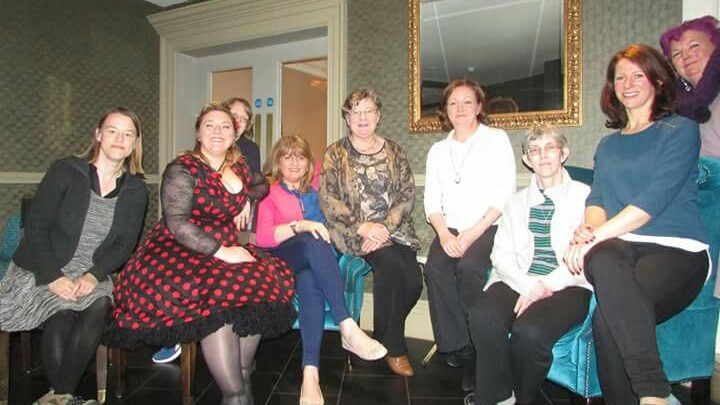
There were 9 of us at the first meeting, but we now have 23 members on our Facebook group. It’s growing all the time as RNA members and friends join. We’re all writers, all at different stages and it’s a great way to offer support to each other. Hopefully there will be more of us at the next meeting.

Do your meetings include a meal?
Yes. We love food. It could be finger food, afternoon tea or a sit down lunch, whatever the individual organisers feel like organising. Variety is the spice of life.

Is your chapter open to non-members of the RNA?
It is. We welcome everyone writing romance or strong romantic elements. Basically lots and lots of writers. I think the idea is to have a support network and people to rely on. We have new writers and old hands sitting down together and exchanging ideas.

How long are your meetings?
We are very laid back so maybe a couple of hours of chat and food. Perhaps the odd drink. The main idea is to provide a space for writers to interact and share, to support each other and have a good time. It can be such a solitary life, so having a group is invaluable.

Can you give an outline of speakers/guests you’ve had in the past year?
None as yet, but once we hit our stride I’m sure we’ll start to arrange more.

What do you have planned for the rest of 2016?
We’re just about to start planning our June meeting. It would have been July but the date clashes with the RNA Conference so we moved it back a month. Then hopefully we’ll have another in September. We also have members having book launches (Hazel Gaynor in June, and myself in September, so naturally all members are invited to those as well).

What would you say makes your chapter of the RNA so special?
Very friendly and open, still finding our way so we’re hoping for lots of involvement from members with an aim to getting the type of group we want to be part of. There is of course the Irish gift for get-togethers to take into account as well. We are known for our welcomes, all one hundred thousand of them. We’re really looking forward to moving about the island a bit for different meetings and seeing different places as well. We could even work in some research trips along the way. I think ever writer has an adventurer inside them.

Does your chapter have a website, Facebook page or Twitter account?
We have a Facebook page - https://www.facebook.com/groups/169428223430539/

Who is the contact for new members?
Ruth Frances Long, info@rflong.com, or the Facebook group.

Thank you, Ruth. Your enthusiasm is inspiring. We wish this new group in our family of chapters every success for the future.

This post was compiled by Natalie Kleinman
If you would like to write for the blog please contact us on elaineeverest@aol.com


Wednesday, March 18, 2015

A NIGHT FOR ROMANCE

All roads led to London for the annual Romantic Novelist Association’s Romantic Novelist of the Year Awards (RoNA’s) held this year in the Gladstone Library at the Liberal Club, One Whitehall Place.

Bubbly
Members, guests and finalists met to chat over a glass of bubbly before the main event of the evening got under way. We had a chance to peruse the books that were up for awards under the six sections as well as catch up with friends and fellow members. The RNA is nothing if not friendly and we love a celebration and a party. Who would win and what else was in store during the evening ahead?

Canapes and Introductions
Jane Wenham Jones & Barbara Taylor Bradford
After finding our tables and partaking of the delicious canapes our Chair, Pia Fenton welcomed everyone to the event. Agents, publishers, established authors, new writers, friends and family clapped enthusiastically as Jane Wenham Jones started the evening’s proceedings by introducing our special guest, Barbara Taylor Bradford. There was more than one author in the room who had dreamt of becoming a writer after reading Barbara’s A Woman of Substance. Barbara was warm and encouraging offering advice to any would be aspirant to be focussed and concentrated. Those of us in the room were focussed on Barbara, looking as immaculate as any heroine.

Category Winners
This year, books shortlisted for the RoNA Rose, for category/series and shorter romance, competed for the first time with all other categories for the overall prize of Romantic Novel of the Year. Prior to announcing the overall award winner, Barbara Taylor Bradford revealed the winners of the individual categories and presented them with star-shaped crystal trophies.

Historical – Hazel Gaynor, The Girl Who Came Home
William Morrow, (Harper Collins)
For novels set in a period before 1960
Hazel Gaynor
RoNa Rose – Louise Allen, Scandal’s Virgin
(Harlequin Mills & Boon Historical)
For category/series and shorter romance.
Epic – Ella Harper, Pieces of You
(Avon)
For novels containing serious issues or themes, including gritty, 
multi-generational stories.
Contemporary – Lucy Dillon, A Hundred Pieces of Me
(Hodder & Stoughton)
For mainstream romantic novels set post-1960, and can include chick lit, 
paranormaland romantic suspense.
Lucy Dillon
Young Adult– Joss Stirling, Struck - formerly Storm & Stone
(Oxford University Press)
Featuring protagonists who are teenagers or young adults.
Joss Stirling
Romantic Comedy – Lucy-Anne Holmes, Just a Girl Standing in Front of a Boy
(Sphere (Little, Brown)
For consistently humorous or amusing novels.
Lucy Holmes
The categories and the award winners with Barbara Taylor Bradford.

The Romantic Novelist of the Year Award would be announced later in the proceedings. Who would be the winner?

Outstanding Achievements
A high spot of the evening was the presentation of Outstanding Achievement awards to two of our favourite authors, Jill Mansell and Carole Matthews, both ladies having reached the pinnacle of their careers by having twenty five books published. In her acceptance speech Jill revisited her twenty-one year old self when becoming a writer wasn’t even yet a dream and Carole attributed her fat bottom (not true) and repetitive strain industry to her career. Naturally – because that’s the sort of people they are – they heaved praise and thanks upon all the people who had helped them along the way.

Team of Judges
All too soon the official part of the evening was drawing to an end. A panel of independent judges read the six category winners’ novels before meeting to debate the finer points of each book. The panel included Sarah Broadhurst, formerly The Bookseller; Alison Flood, Guardian.co.uk; Jane Mays, The Daily Mail; Karin Stoecker, ex-Editorial Director, Harlequin Books and Matt Bates of WHSmith Travel.

The Big Moment!
Barbara opened the red envelope and announced the winner of the Romantic Novel of the Year Award to be…Joss Stirling with, Struck. A fantastic achievement and the first time the prize has gone to a novel in the young adult category. Barbara Taylor Bradford presented Joss with her trophies and a cheque for £5000

 
Praise
The five judges were fulsome in their praise of Struck:
            “A fast -paced novel, full of adventure and danger, as well as a satisfying romance with an instant attraction.”
            “Mean Girls meets 21 Jump Street, navigating life and themes of school cliques and bullying.”
            “Main characters were well drawn.”
            “A satisfying developing relationship between heroine and hero. A provocative read which delivered on the romance. Good plot. Great hero and heroine.” 
            “An absorbing read that really pulled you in – I admired the energy and pace.”
Our heartiest congratulations to Joss and indeed to all of the contenders and winners.

Until Next Year
Guests lingered to sip wine and chat before heading for home and your intrepid blogging team took the opportunity to chat to potential interviewees for the blog. Yet another fabulous RNA event had come to an end. Well done to the organisers and the committee for pulling off another fabulous and memorable event. Farewell until next year – but first we have the Summer Party, our Summer Conference and the Winter Party. See you there!


Elaine & Natalie

Friday, February 27, 2015

Hazel Gaynor: A Memory of Violets

Today we welcome, Hazel Gaynor to the RNA blog to tell us something of the research into her latest book.

Roses are pink …

The idea for A MEMORY OF VIOLETS was first planted back in 1988, when I was seventeen years old and played the role of Eliza Doolittle in the school production of My Fair Lady. There was something about this character and about London in 1912 that really struck a chord with me. Many years later, I started to write notes for a novel set around London’s flower sellers, and began to research street life in the early 1900s in the hope of discovering the real Eliza Doolittles. I was
astonished to learn just how many young children and women were selling flowers and watercress, many of whom were orphaned, blind or physically disabled.
 
Early in my research, I discovered the fascinating history of Christian preacher and philanthropist, John Groom. Groom wanted to find a way to help the flower sellers who sold bunches of flowers and watercress on the streets near his Clerkenwell home. He established the Watercress and Flower Girls Mission (commonly known as the ‘crippleage’) housing the young women in a row of terraced houses in a street in Clerkenwell, North West London and establishing an orphanage in Clacton for the youngest children.
 
With a dozen occupants in each home, under the care of a Housemother, these women and young girls lived and worked together making artificial flowers in a nearby factory. It took them off the streets, gave them employment that wasn’t dependent on the seasons or the weather, and improved their quality of life immeasurably. The artificial flowers produced were mostly sold to the wealthy to decorate their homes, but the work of the ‘Flower Girls’ was eventually noticed by the Dowager Queen, Alexandra of Denmark (widow of King Edward VII).
 
Queen Alexandra was to commemorate fifty years since she had first arrived in England from her native Denmark and rather than the usual processional drive through London, she wanted to use the occasion to raise funds for the city’s hospitals. Aware of the work of the girls at Groom’s ‘crippleage’ she commissioned them to make thousands of artificial pink roses for buttonholes which would be sold all over London.

The event on 26th June, 1912, was a huge success, supported by a thousand titled ladies who took to the streets to sell the roses. As The Times reported of the event, ‘the most noticeable sight was the enormous number of men who wore [a rose]. In the City and West End, at any rate, nearly every second men had at least one bloom and often had two or three in one buttonhole.‘ In total, over £30,000 was raised for charity (several million pounds in today’s equivalent). This was the very first ‘flag’ day of its kind, known as Queen Alexandra Rose Day, and the capital had never seen anything like it.
 
From its inauguration, Alexandra Rose Day became an annual event in London and was greatly supported for one hundred years. The flower girls also went on to make some of the first poppies for the Royal British Legion after the Great War. Although ‘Rose Day’ is no longer held annually, Alexandra Rose Charities is still running today, and from 2013 has focused on food-related issues affecting lower-income families. The charity’s Patron is Princess Alexandra, the Honourable Lady Ogilvy – great granddaughter of Queen Alexandra of Denmark. John Groom’s work also continues to this day under the organisation known as Livability, the UK’s largest Christian disability charity. Her Royal Highness, The Princess Royal, is the charity’s patron.
 
As we approach the annual Daffodil Day on March 27th (an annual fundraising event for Marie Curie Cancer Care in the UK and the Irish Cancer Society in Ireland), I will think about the blind, crippled and orphaned girls and young women who made those first little pink Alexandra roses, and started the concept of selling artificial flowers for charities. It is quite incredible to think that their legacy lives on over one hundred years later.
 
To get involved with Daffodil day, contact
Thank you, Hazel for the informative insight into the world of the flower girls.
 
The RNA blog is brought to you by,
Elaine Everest & Natalie Kleinman

If you would like to write for the blog please contact us on elaineeverest@aol.com
Friday, September 5, 2014

Difficult Second Novels


We are delighted to welcome back, Hazel Gaynor who will tell us about her approaching second book.

It is a truth universally acknowledged that second novels are a curious thing. Like that ‘difficult second album’ so many bands struggle to produce (I’m thinking especially of T’Pau, Mr Blobby and the Sex Pistols here) so too the ‘difficult second novel’. What if it doesn’t live up to expectations? What if all those readers who loved your first novel don’t fall in love with your second? What if, what if, what if. Realising you have ONE published, actual book is quite something. Doing it all over again is both a terrifying and exhilarating prospect.
My second novel A MEMORY OF VIOLETS will be published in February in the U.S and March in the UK and Ireland. Final proofs are in. Back cover blurbs have been written. The (beautiful) cover has been designed. We are on the final countdown toward ARE’s and galleys and early, nerve-shredding, reviews and I suddenly feel crippled with self-doubt and writerly angst. I’m sure this is normal and expected (please tell me this is normal and expected), but it’s a strange sensation all the same. While part of me cannot wait for this novel to be published and read, to be an actual book (rather than words on a screen or notes scribbled on a pile of papers), another part of me wants to creep into a distant cave and hide until it’s all over.

So, here are my ten truths about writing second novels:
1)      Second novels are like a second child. You are much more relaxed about it in many ways (you’ve been through this all before, right), but then you panic as you realise you can’t remember what on earth you are supposed to do.

2)      Second novels come with expectation. Yes, debuts come with expectation also, but it’s your first (bless), people expect the worst and are surprised if it is actually any good. But if it is, people expect this one to be even better. Readers have something to compare your second novel to. This makes you feel nauseous.

3)      Second novels come without the cotton wool and pampering of debuts. Much like a second pregnancy, people soon forget you’re going through the same aches, pains, insecurities and fears. They assume you have it all figured out, because you’ve done it once before. You’re a writer now. Yeah, yeah. We know.

4)      Second novels come with a contractual agreement. With deadlines. With a publication date. No namby-pamby flouncing around and ‘look at me, I’m writing a novel’ with this one. This is serious, dude. You have schedules to stick to.

5)   Second novels come with experience. You know what’s coming. You know everyone won’t gush with praise. You know some people might even be downright nasty. This makes you feel nauseous.

6)      Second novels have to be juggled with the first (which you are still promoting). You cannot indulge them with your undivided attention like you did with your precious debut. Sometimes, one or the other may be a little bit ignored. And if you’re already writing your third, Lord help you.

7)      Second novels must (naturally) improve on the first. You must have learned something in the process of writing, editing and publicising your debut, and you must prove this with your second. No pressure then.
  8) Second novels show your readers who you really are – the style of your writing, your voice, your brand, your ‘thang’. You are setting your stall out. Pitching your tent. Get it wrong, and people may just quietly walk away and pick up the new Robert Galbraith instead.

  9)Second novels come with the potential for all those lovely ‘Praise for …’ quotes from your previous novel and might even come with a ‘from bestselling author’ splash on the cover. Oh, the joy!

10)  Second novels are, ultimately, brimming with opportunity. They are wonderful, frightening things that consolidate your place as a writer; your space on the shelf. And when all is said and done, you wouldn’t swap that for the world.

 
Hazel Gaynor is a mum, novelist and freelance writer. Her debut novel THE GIRL WHO CAME HOME is a 
NY Times and USA Today best seller. Her second novel A MEMORY OF VIOLETS will be published in
 February, 2015. Hazel is also a guest blogger and features writer for writing.ie 
Originally from Yorkshire, she now lives in Ireland with her husband, two children and an accident-prone cat.


Read more about Hazel and her books at http://www.hazelgaynor.com/
Goodreads https://www.goodreads.com/hazelgaynor
Twitter @HazelGaynor

Thank you, Hazel and good luck with book number two!

This blog is brought to you by Elaine Everest and Natalie Kleinman. If you would like to write about the craft of
writing or perhaps be interviewed about your writing life please contact us at elaineeverest@aol.com

Friday, June 13, 2014

America Calling: Radio Ga Ga in the USA


We are thrilled to welcome, author Hazel Gaynor who tells us of her experiences with American radio.

 It’s 8.20pm on 14th April. My phone rings. My heart starts to race. I’ve been waiting for the call all day - my first live radio interview, with a station in Seattle. Ten minutes later, it is all over and a bit of a blur. I think I sounded reasonably sane. I managed not to swear. The kids didn’t interrupt me. One down, nineteen to go.


Two weeks earlier, my debut novel THE GIRL WHO CAME HOME – A Novel of the Titanic had been published in America. Full book-promo mode kicked in: guest posts, interviews, reviews, giveaways and, most unexpectedly, a U.S. radio tour, came my way.
It started with an email from my publicist: ‘Would you be up for a radio tour to promote the book?’ Would I what?! I expected a slot on one or two shows. It turned out to be twenty shows, spanning the entire U.S of A. Gulp!
Most of the interviews were scheduled for 15th April to coincide with the 102nd anniversary of the sinking of Titanic. Most were live on air. Some were pre-recorded. I chatted to energetic morning show hosts (like the alarmingly-named, but ever-so-lovely, Bulldog) and had more serious conversations with hosts like Cindy Wolfe Boynton at Literary New England. I spoke about my characters, Titanic, research, the writing process and my cat. I even managed to get in a song request for my children.
Promoting my debut novel live on air was a strange and wonderful experience. Now that I’ve had chance to reflect, here’s a little of what I’ve learnt …
 
1) The phone will work. It won’t inexplicably break, just because you’re expecting important calls from America. You don’t need to keep checking the dial tone (although, of course, you will).
 
2) No matter how quiet you ask the kids to be while they play Hobbits downstairs, real life carries on outside. The ice cream van will blare out ‘Pop goes the Weasel’, the neighbour will cut his grass and someone will call the fire brigade. All you can do is cringe, close the window and hope America can’t hear.
 
3) At least once, you’ll forget the question. Good idea to scribble them down as they are asked in case you go off on a tangent, or have a ‘Hobbit’ unexpectedly appear and distract you.
 
4) Listen to live streaming before you go on air. Every show is different. While you are prepared to talk knowledgeably about Titanic and your novel, you may find the host wants to chat about gin, Jägermeister and your cat. Really – they might.
 
5) Stand up when you’re talking and walk around. Someone once advised me to do this when I worked in an office and had a difficult phone call to make. It works.

 
6) Give the title of your book – preferably several times. Saying ‘my novel’ won’t help people identify it when they go to buy it.
 
7) Don’t be put off by the sixteen members of your family you’ve invited round for Good Friday lunch (yes, it really happened). They’ll threaten to start heckling after they’ve drunk all your Prosecco, but you must remain professional at all times – i.e. retreat to the attic and ignore them.
 
8) Keep an eye on the time, or set a stopwatch. Ten minutes passes very quickly. Make your point and don’t overrun. The stations work to tight schedules (and you have guests to feed, remember).
 
9) Keep a note of the host’s name. You don’t want to thank Tom when you are now talking to Bonnie. This is easily done when you have back-to-back segments and a ‘Hobbit’ hiding under the desk.
 
10) Have an extra bottle of Prosecco in the fridge for when it is all over and you can collapse in a deck chair in the garden.
 
If you’d like to hear the interviews, visit my website where I’ve posted a selection of podcasts. I’m also thrilled to be speaking at the 2014 RNA Summer Conference on ‘Romance and Disaster: Love and the Titanic’ and look forward to meeting lots of you there!

Hazel x

About Hazel:
Hazel Gaynor is a novelist and freelance writer. Her debut novel THE GIRL WHO CAME HOME – A Novel of the Titanic was published by William Morrow (HarperCollins) in the U.S, UK and Ireland in April 2014. Hazel is also a guest blogger and features writer for writing.ie  Originally from Yorkshire, she now lives in Ireland with her husband, two children and an accident-prone cat. 

Twitter: @HazelGaynor

Amazon page: The Girl Who Came Home

Thank you Hazel

RNA blog posts are brought to you by Elaine Everest and Natalie Kleinman.

We are currently seeking articles on the craft of writing. Contact us on elaineeverest@aol.com if you would like to write something for the blog.