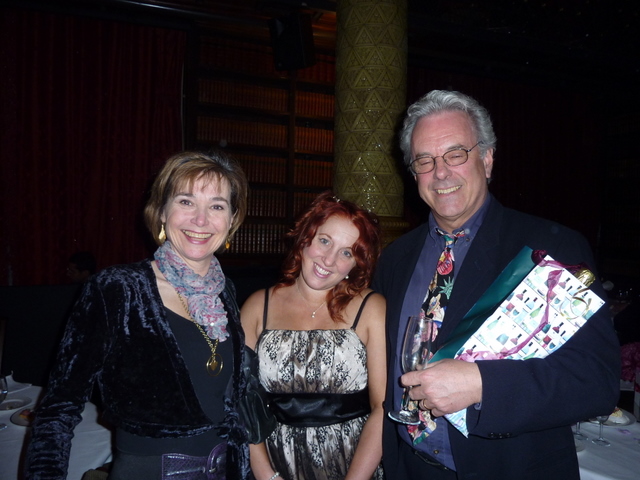
I’m delighted today to be interviewing fellow Lancastrian Anna Jacobs. Anna’s main home is in Australia, but she was born and bred in the cotton towns. With 53 novels published, both historical and modern novels, Anna, I know you claim to be addicted to writing, so do tell us, how did you get started?
My favourite author (Georgette Heyer) died and I tried to write books like hers - regency romances. In the end I had two of them published, but my ‘voice’ as a writer developed in another direction. As part of training myself, I did a university unit in history covering my period. I’d sworn when I got my Master of Business degree that I wasn’t doing any formal studying again, but there you are - I wanted to be sure I had the skills and knowledge to write historical fiction.
To plot or not to plot? How much of a planner are you?
http://www.annajacobs.com/excerpts/plotedit_2010_extract.doc
I’m not a planner as to details of plot. However, I do the main background research before I start. After that I develop the characters and walk with them through the events of the story. It’s often random research that interests me in something and gives me a plot idea. Years ago I found out that 60 Lancashire cotton lasses were sent to Western Australia (my main home) in 1863 because they had no work due to the American Civil War cutting off supplies of cotton. Western Australia was short of maids, because young women sent out there would keep getting married. With 10 men to every woman, how could they resist? I added four more imaginary cotton lasses to the group and started my Swan River Saga with ‘Farewell to Lancashire’.
What do you think an editor is looking for in a good novel?
In my sort of fiction (non-gruesome, no graphic sex or violence) they’re looking for ‘heart’ ie a story that touches your heart, whether it’s historical or modern. Or so one excellent editor told me. This applies to both my modern and historical novels. I’m not an expert in other genres, so will not try to cover them.
Do you write every day? What is your work schedule?
I write most days, probably averaging six and a half days a week. What can I say? I’m addicted to story-telling. I get up at 5.30 am because that’s when I wake, and go to answer my emails, half of which are business emails. Then I have breakfast and shower, before returning to my office. The mornings and early afternoons are my best creative times. I never write after teatime. My creativity vanishes with the sun - and anyway, I like to spend time with my husband, who is also my best friend.
How do you develop your characters?
I choose hair colour, height and a name. I can’t start until I get a name. Then I begin to write. I rewrite the first two or three chapters several times and that helps me get to know my main characters. Once I’ve finished a story, I know them much better, so I go back to the beginning and polish the story and add all sorts of details. I don’t consciously work out what they’re like, I just . . . get to know them by writing. That’s the only way I can explain. And I think of them as people, not characters.
Do you find time to have interests other than writing?
Of course I do. You’d not get enough experience of life to write if you just sat in your office writing. I have a lovely husband, daughters, grandson, friends. And as I live in England for part of the year, I have friends and relatives in both countries. I’m interested in archaeology (Time Team), health issues, reading, watching documentaries that extend my knowledge of the world, meeting people, visiting ancient monuments and lovely old English villages - all sorts of things. I have a bad back, so I can’t do vigorous physical activities, though I do walk on a treadmill most days to help my back and because I want to keep healthy.
Do you enjoy writing sequels or series, If so what is the special appeal for you?
Yes, I do. And readers enjoy them too. They write such lovely letters about the characters that it makes me write more series. However, I don’t like to leave things too unfinished in any book of a series. Readers must be able to read each book on their own, as it’s not always possible to start with Book 1, and work steadily through a series.
They appeal because like my readers, I enjoy finding out what happens to my characters afterwards. In a series, I usually have a different hero and heroine each time, with former heroes and heroines as minor characters. In the Swan River Saga a minor character in Book 3 was so vivid, I’ve written a spin-off book about his story, still with the other major characters popping in and out. I’m not sure yet what to call this new series. We’ll see. ‘The Trader’s Wife’ comes out in September in hardback, a novel set partly in 1860s Singapore and partly in Western Australia. I’m writing the sequel ‘The Trader’s Sister’ now and have ‘gone back’ to Singapore for a visit.
How do you promote your books?
Any way I can, within reason. I have a brand new web site, which gives a huge amount of information, not only about the books, but from behind the scenes, what made me write them and how I did the research. This information is only available on my website. My earlier fantasy novels (written as Shannah Jay) are for sale there as electronic books, as are my earlier historical romances, and of course they’re also for sale on other Internet sites, like Amazon.
I do guest blogs, I give talks, I do interviews on the radio, I write short stories for women’s magazines, I do all sorts of things. And they benefit me in many ways. I meet readers at talks and get feedback from them, which is always interesting and useful. I have a readers’ email newsletter, which people can sign up for by sending an email to AnnaJacobs-subscribe@yahoogroups.com Many of the readers receiving it write back to me at intervals.
I am not prepared to stand on my head to attract attention, though!
Are you a specialist of one genre or do you have another identity?
I thought I was writing women’s fiction, both historical and modern as Anna Jacobs, but I regularly get letters from men, and it’s gradually become clear that I’m not writing just for women. So I don’t know what to call my Anna Jacobs books, maybe family/relationships stories. I also write fantasy and science fiction as Shannah Jay, but only as a minor interest these days. My Shannah Jay books are out of print, but I’m selling them from my website and from other Internet sites. And I’m putting up new ones that I’ve written for a hobby, to ‘find out what happens’. Publishers don’t want authors who aren’t focused on their genre.
Do you enjoy research and how do you set about it?
I love research. I did a university History unit to start me off correctly. I have a wall of research books, and I use the Internet. I also write to experts whom I find on the Internet and they’ve been very generous in helping me. I enjoy the history of ordinary people most of all, not political stuff or wars. I like to find out how people lived. Amateur autobiographies are very helpful for this and I buy them from tourist shops or anywhere I find them. They give the picture without it being filtered through a historian’s mind. Even good historians are bound to have their own biases.
Tell us about your latest book and how you got the idea for it.
It’s Book 3 of the Swan River Sage, a series which I’ve already mentioned. The series is about four sisters, one for ‘Farewell to Lancashire’ one for ‘Beyond the Sunset’ and the twins’ stories are in ‘Destiny’s Path. I wanted to use the Suez route from Australia to England in this series. Before the Suez Canal, passengers disembarked and crossed the isthmus to Alexandria by train, then got on a ship again, stopping to change ships at Galle in Ceylon. One twin goes back to England on her own and the other stays in Australia with the man she loves but can’t marry. It’s very poignant at times.
http://www.annajacobs.com/excerpts/Chapter_1_Destinys_Path.pdf
I have a second new book coming out in April, a modern story ‘Moving On’ about a woman who is sidelined at her own daughter’s wedding for her ex’s new wife and it’s the final straw. She finds the courage to move on and make a new life for herself, which isn’t easy for a gentle person.
Can you tell us something of your work in progress?
I’m writing ‘The Trader’s Sister’, Book 2 in my new spin-off series, which hasn’t yet got a name. I’m so enjoying going back to Singapore. I’ve had some wonderful help about schooners and Suez, and found a great book about the P&O shipping line. A Chinese friend is helping me with the family stuff in Singapore. It’s fascinating to research and write.
Anna lives in both Australia and the UK. No prizes for guessing where she is during the UK winters! But as she spends the summers in England we hope to meet up with you at RNA events at some point. Thank you Anna for sparing the time to talk to us. I wish you continued success.
You can read samples of all Anna’s books on her website and find out background information about them that is available nowhere else. You can also buy some of her out of print books as ebooks there. http://www.annajacobs.com/
Interviews on the RNA Blog are conducted by Freda Lightfoot and Kate Jackson. If you would like an interview, please contact me at: freda@fredalightfoot.co.uk
Friday, March 11, 2011
Tuesday, March 8, 2011
RNA Pure Passion Awards - The Pics
In the glamorous setting of the Gladstone Library, One Whitehall Place the attendees sipped champange and enjoyed a wonderful afternoon into evening...(apologies for the funny layout - blogger and jet lag don't seem to work together)
| Broo Doherty and Evelyn Ryle |
| Short listed author Sarah Duncan |
| Judy Astley and Lyn McCulloch |
| Short listed author Jan Jones |
| Liz Fenwick and Penny Jordan |
| Julie Cohen and Karin Stoecker |
| Tim Bentinck (alias David Archer) and Jane Wenham-Jones |
| Katie Fforde |
| The Gladstone Library |
| Enjoying the atmosphere before the announcements |
| Awaiting the start |
| Penny Jordan receiving a lifetime achievement award |
| Tim and Jane |
| Louise Allen receiving the Love Story of the Year Award |
| Elizabeth Chadwick receiving the Historical Novel Award |
| Jill Mansell reeiving the Romantic Comedy award |
| Josephine Cox receiving a lifetime achievement award |
| JoJo Moyes receiving Romantic Novel of the Year award |
| Penny Jordan with her award and friends |
| The Flaming Meringues |
| Roger Sanderson congratulating Josephine Cox |
| Sue Morrcroft |
| Bring on the pudding |
| The table of short listed author Tom Gamble |
| Sophie Kinsella and JoJo Moyes |
| Jane Judd and Jill Mansell |
| Broo Doherty and short listed author Christina Jones |
| Elizabeth Chadwick with her award |
| Liz Fenwick and Carole Blake |
| Louise Allen |
| Short listed author Ruth Saberton (centre) |
| Julie Cohen and Cat Cobain |
| The portrait that watched over the event |
| JoJo with fabulous handbag and shoes |
| Enjoying the champagne |
| Jill's gorgeous handbag |
| The Churchill Bar |
| Short listed author Christina Courtenay |
| The fireplace in the ladies loo |
| Carole Blake's purple suede shoes |
| The amazing free standing staircase |
Friday, March 4, 2011
Author Interview with Lynne Connolly
Today we have one of the new breed of writers, Lynne Connolly, who writes for epublishers, which doesn’t necessarily mean her titles only appear as ebooks. In many cases you can choose to buy print if you wish. So tell us Lynne, how did you get started?
I’ve been writing pretty much all my life, but I only decided to go for publication ten years ago. I was published two years after that, with Yorkshire, the first Richard and Rose book.
To plot or not to plot? How much of a planner are you?
Both formal and informal. I used to do detailed description of each scene, using the Donald Maass workbook, but I think as you write more, you get more confident. Now I work from a synopsis, usually a couple of pages, describing the main turning points of the book.
However I do a lot of staring into space and I have a lot of baths, when I’m working out plot knots and most importantly, getting to know my characters. Romance is all about character and how they cope with the situations you cast in their way, so they must be at the core of everything. I’d rather alter a plot to suit a character than the other way around.
What do you think an editor is looking for in a good novel?
Something different. Or rather, the same but different. They want something that stands out, but they want something they can sell. So if you write romance, they want a story about a developing relationship with a happy ending. That’s not a formula, because so much else goes on, it’s a requirement.
I was going to say they want believable situations, but that’s not always true. I’ve read any number of historicals recently where the plot just wouldn’t work. But they do want believable characters. Not perfect ones - it’s boring to read about perfection - but characters struggling through to win and be with each other. I think an editor knows what she doesn’t want, but she doesn’t really know what she wants until she reads it.
Where is your favourite place to work?
I work in the living room. I sit on the sofa, with the TV or stereo on, and I work. That started when I was a little grammar school girl who had to do her (copious) homework in the living room because in those days that and the kitchen were the only warm rooms in the house! Now I can’t work well in silence. So I use libraries for research but I like noise when I write!
My pc is very quiet, and sits next to the sofa, and my screen, mouse and keyboard are on a little laptop table.
Do you write every day? What is your work schedule?
No, I don’t write every day, but I work every day. Sometimes it’s promotion day, and sometimes it’s blog writing day. Or plotting day.
Which authors have most influenced your work?
I don’t know. Honestly. I can tell you the authors I love, and I grew up loving, but I write what’s in my head. I write mid-Georgian set romances, and one of my series features the same couple throughout, and is written in the first person. I don’t know where Richard came from, much less Rose.
What is the hardest part of the writing process for you?
The start of the day. I get that fear that I can’t do it, that I’ve lost it, and I do a lot of procrastination before I start. And galleys. I force myself to go through them, but at that stage, I hate it all and I don’t know why I ever thought such rubbish was any good (that feeling does pass rather quickly, thankfully!)
How do you promote your books?
Any way I can. I do a lot of blogging, because it works for me. I dislike doing "Buy my book" promotions, other than the first time, to let people know there’s a book around. But repeating it doesn’t work for me, particularly online. So I review, write columns and essays and spread my name as a "brand" rather than a particular book.
I also fly across the Atlantic every year for Romantic Times Convention. It costs a fair bit, but it’s wonderful. I do research for the next book, since many of my books are set in the States, and I put myself about a lot. Romantic Times is like nothing this side of the Atlantic. It’s a huge convention, with around 350 authors and 1500 readers and there are two big book signings. I take lots of promo stuff - postcards, little gifts with my name on, other goodies - and attend all the functions, including the three big balls. A lot of business is done at the convention. I’ve finalised two contracts there, for different publishers, and discussed a new series. I honestly think I wouldn’t have got on like I have without going there. And I’ve met some lovely people. It means readers can put a face to the name, and of course I have the "quaint" English accent!
I write columns and reviews for several blogs, including Erotic Readers and Writers Association, The Raven Cafe, UK Regency and The Good The Bad and The Unread. I also have my own blog, but you’re more likely to find me here:
http://goodbadandunread.com/
Do you have interests other than writing?
I do miniatures. Doll’s houses and their contents and their dolls. If you hunt on my website, you’ll find lots of pictures of my houses and the dolls I make. In fact, when I started, it was either make dolls for sale, and keep writing as a hobby, or the other way about. I chose the other way. If you think you can’t make a living, check out the websites of Jill Bennett and James Carrington. Jamie’s dolls are exquisite. A double sculpture of Oberon and Titania went on sale for $1000. Underpriced, if you ask me.
What advice would you give a new writer?
First and foremost - don’t give up. The only writer who will definitely not get published is the one who never queries a publisher or agent. And don’t obsess about the market. Write the book you want to, then look around for the market. Decide what you will compromise on to make your story marketable, and what you won’t. Value yourself. It’s so easy to get beaten down in this market. You finished a book! How many people can say that?
And join the RNA. Seriously, do it. I’ve had so much encouragement and cameradierie from the members, I don’t think I would have got this far without them.
Tell us about your latest book, and how you got the idea for it.
There are two, so I’ll tell you about the paranormal romance. Paranormal is a huge sector in the States, and with the success of Twilight and Harry Potter, set to carry on that way. My latest, due out on 8th March is Griffin’s Treasure. I write about a secret department attached to the CIA and MI6, called Department 57, because I’ve seen that the most dangerous departments have the most mundane names! My paranormal beings are called Talents - I have vampires, shape-shifters (all mythical beasts), and anthropomorphids (anthros) like mermen and suchlike. It’s James Bond with fang and claw!
In this one, the hero Josh, a British football player for Manchester Dons, goes to San Francisco to hunt for his brother Laurie, who has been kidnapped by scientists so they can experiment on him. He finds Chana, an ex cop, who has a secret even she doesn’t know about. Helping Chana come to terms with her secret and finding his brother, together with falling deeply in love for the first time in his life sends Josh into a spin.
Griffin’s Treasure was published before and won the 2004 EPPIE for Paranormal Romance, but this version is heavily rewritten. It was really interesting to revisit the book, and it showed me just how much I’ve changed my writing style even in 6 years.
You can read an extract and more details on my website: http://lynneconnolly.com/GriffinsTreasure.html
Can you tell us something of your work in progress?
I’m writing the next and, for now, the last Richard and Rose. I really don’t want to say goodbye to this couple, and they will reappear in cameo roles in future books. Try to keep Richard out! The newest episode in their lives, Maiden Lane, comes out on the 15th March.
What I originally planned was a quiet man in the lower ranks of the aristocracy who would solve country house murders with his unassuming wife. What I got was Richard Kerre, Viscount Strang, dandy, leader of fashion and heir to one of the richest titles in the country. I didn’t plan him that way. He just arrives. Master at swordsmanship, he’s not afraid to wear pink silk and lace, and yet he’s all man. This adventure sees him and his beloved wife Rose back in London, trying to survive a joint attack by both their principal enemies. This time someone has to die, because there’s no chance of a standoff.
It’s very hard saying goodbye to my couple, and they are suffering in this last book, poor things! But it is a romance, and remember what I said earlier!
I write for Ellora’s Cave, Samhain Publishing, Loose-Id Publishing, Total E-bound, Champagne Publishing, Awe-Struck Books, and Uncial Press.
That’s brilliant, Lynne. And my final question is: You seem to be remarkably prolific and have several publishers, would you share with us how many books a year you write?
I suppose I write 4 full lengths a year and a couple of novellas. Full lengths are usually around 80,000, and novellas maybe half that. Sometimes it’s harder to write the short ones because you need to get all that depth of character in a smaller space!
Thank you Lynne, that was fascinating. You can find out more by visiting her website.
http://lynneconnolly.com
Interviews on the RNA Blog are conducted by Freda Lightfoot and Kate Jackson. If you would like an interview, please contact me at: mailto:freda@fredalightfoot.co.uk
I’ve been writing pretty much all my life, but I only decided to go for publication ten years ago. I was published two years after that, with Yorkshire, the first Richard and Rose book.
To plot or not to plot? How much of a planner are you?
Both formal and informal. I used to do detailed description of each scene, using the Donald Maass workbook, but I think as you write more, you get more confident. Now I work from a synopsis, usually a couple of pages, describing the main turning points of the book.
However I do a lot of staring into space and I have a lot of baths, when I’m working out plot knots and most importantly, getting to know my characters. Romance is all about character and how they cope with the situations you cast in their way, so they must be at the core of everything. I’d rather alter a plot to suit a character than the other way around.
What do you think an editor is looking for in a good novel?
Something different. Or rather, the same but different. They want something that stands out, but they want something they can sell. So if you write romance, they want a story about a developing relationship with a happy ending. That’s not a formula, because so much else goes on, it’s a requirement.
I was going to say they want believable situations, but that’s not always true. I’ve read any number of historicals recently where the plot just wouldn’t work. But they do want believable characters. Not perfect ones - it’s boring to read about perfection - but characters struggling through to win and be with each other. I think an editor knows what she doesn’t want, but she doesn’t really know what she wants until she reads it.
Where is your favourite place to work?
I work in the living room. I sit on the sofa, with the TV or stereo on, and I work. That started when I was a little grammar school girl who had to do her (copious) homework in the living room because in those days that and the kitchen were the only warm rooms in the house! Now I can’t work well in silence. So I use libraries for research but I like noise when I write!
My pc is very quiet, and sits next to the sofa, and my screen, mouse and keyboard are on a little laptop table.
Do you write every day? What is your work schedule?
No, I don’t write every day, but I work every day. Sometimes it’s promotion day, and sometimes it’s blog writing day. Or plotting day.
Which authors have most influenced your work?
I don’t know. Honestly. I can tell you the authors I love, and I grew up loving, but I write what’s in my head. I write mid-Georgian set romances, and one of my series features the same couple throughout, and is written in the first person. I don’t know where Richard came from, much less Rose.
What is the hardest part of the writing process for you?
The start of the day. I get that fear that I can’t do it, that I’ve lost it, and I do a lot of procrastination before I start. And galleys. I force myself to go through them, but at that stage, I hate it all and I don’t know why I ever thought such rubbish was any good (that feeling does pass rather quickly, thankfully!)
How do you promote your books?
Any way I can. I do a lot of blogging, because it works for me. I dislike doing "Buy my book" promotions, other than the first time, to let people know there’s a book around. But repeating it doesn’t work for me, particularly online. So I review, write columns and essays and spread my name as a "brand" rather than a particular book.
I also fly across the Atlantic every year for Romantic Times Convention. It costs a fair bit, but it’s wonderful. I do research for the next book, since many of my books are set in the States, and I put myself about a lot. Romantic Times is like nothing this side of the Atlantic. It’s a huge convention, with around 350 authors and 1500 readers and there are two big book signings. I take lots of promo stuff - postcards, little gifts with my name on, other goodies - and attend all the functions, including the three big balls. A lot of business is done at the convention. I’ve finalised two contracts there, for different publishers, and discussed a new series. I honestly think I wouldn’t have got on like I have without going there. And I’ve met some lovely people. It means readers can put a face to the name, and of course I have the "quaint" English accent!
I write columns and reviews for several blogs, including Erotic Readers and Writers Association, The Raven Cafe, UK Regency and The Good The Bad and The Unread. I also have my own blog, but you’re more likely to find me here:
http://goodbadandunread.com/
Do you have interests other than writing?
I do miniatures. Doll’s houses and their contents and their dolls. If you hunt on my website, you’ll find lots of pictures of my houses and the dolls I make. In fact, when I started, it was either make dolls for sale, and keep writing as a hobby, or the other way about. I chose the other way. If you think you can’t make a living, check out the websites of Jill Bennett and James Carrington. Jamie’s dolls are exquisite. A double sculpture of Oberon and Titania went on sale for $1000. Underpriced, if you ask me.
What advice would you give a new writer?
First and foremost - don’t give up. The only writer who will definitely not get published is the one who never queries a publisher or agent. And don’t obsess about the market. Write the book you want to, then look around for the market. Decide what you will compromise on to make your story marketable, and what you won’t. Value yourself. It’s so easy to get beaten down in this market. You finished a book! How many people can say that?
And join the RNA. Seriously, do it. I’ve had so much encouragement and cameradierie from the members, I don’t think I would have got this far without them.
Tell us about your latest book, and how you got the idea for it.
There are two, so I’ll tell you about the paranormal romance. Paranormal is a huge sector in the States, and with the success of Twilight and Harry Potter, set to carry on that way. My latest, due out on 8th March is Griffin’s Treasure. I write about a secret department attached to the CIA and MI6, called Department 57, because I’ve seen that the most dangerous departments have the most mundane names! My paranormal beings are called Talents - I have vampires, shape-shifters (all mythical beasts), and anthropomorphids (anthros) like mermen and suchlike. It’s James Bond with fang and claw!
In this one, the hero Josh, a British football player for Manchester Dons, goes to San Francisco to hunt for his brother Laurie, who has been kidnapped by scientists so they can experiment on him. He finds Chana, an ex cop, who has a secret even she doesn’t know about. Helping Chana come to terms with her secret and finding his brother, together with falling deeply in love for the first time in his life sends Josh into a spin.
Griffin’s Treasure was published before and won the 2004 EPPIE for Paranormal Romance, but this version is heavily rewritten. It was really interesting to revisit the book, and it showed me just how much I’ve changed my writing style even in 6 years.
You can read an extract and more details on my website: http://lynneconnolly.com/GriffinsTreasure.html
Can you tell us something of your work in progress?
I’m writing the next and, for now, the last Richard and Rose. I really don’t want to say goodbye to this couple, and they will reappear in cameo roles in future books. Try to keep Richard out! The newest episode in their lives, Maiden Lane, comes out on the 15th March.
What I originally planned was a quiet man in the lower ranks of the aristocracy who would solve country house murders with his unassuming wife. What I got was Richard Kerre, Viscount Strang, dandy, leader of fashion and heir to one of the richest titles in the country. I didn’t plan him that way. He just arrives. Master at swordsmanship, he’s not afraid to wear pink silk and lace, and yet he’s all man. This adventure sees him and his beloved wife Rose back in London, trying to survive a joint attack by both their principal enemies. This time someone has to die, because there’s no chance of a standoff.
It’s very hard saying goodbye to my couple, and they are suffering in this last book, poor things! But it is a romance, and remember what I said earlier!
I write for Ellora’s Cave, Samhain Publishing, Loose-Id Publishing, Total E-bound, Champagne Publishing, Awe-Struck Books, and Uncial Press.
That’s brilliant, Lynne. And my final question is: You seem to be remarkably prolific and have several publishers, would you share with us how many books a year you write?
I suppose I write 4 full lengths a year and a couple of novellas. Full lengths are usually around 80,000, and novellas maybe half that. Sometimes it’s harder to write the short ones because you need to get all that depth of character in a smaller space!
Thank you Lynne, that was fascinating. You can find out more by visiting her website.
http://lynneconnolly.com
Interviews on the RNA Blog are conducted by Freda Lightfoot and Kate Jackson. If you would like an interview, please contact me at: mailto:freda@fredalightfoot.co.uk
Subscribe to:
Posts (Atom)