Thursday, May 19, 2011

RNA Summer Party

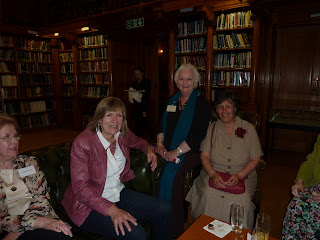
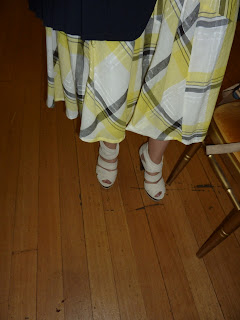
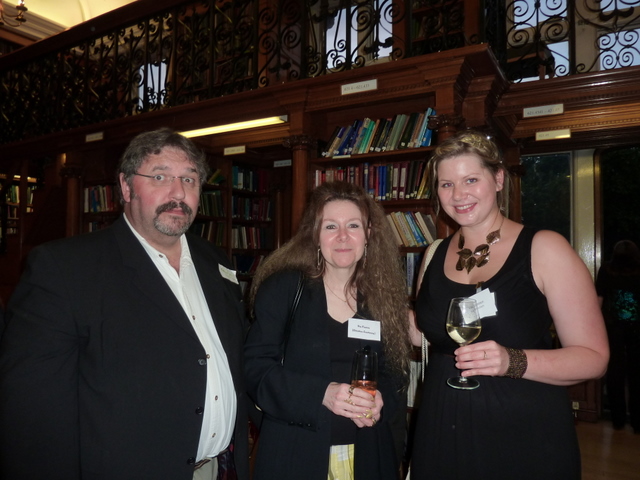
Last night the Library at the Institute of Mechanical Engineers was filled with a wonderful array of frocks and shoes and buzzing conversation....and the winner of the Joan Hessayon Award for New Writers...


Jan Jones


Katie Fforde

The short listed authors

The winner of the Joan Hessayson Award - Charlotte Betts

Katie Fforde, new RNA President, toasting Diane Pearson, outgoing RNA President
Last year's winner Lucy King

Talli Roland and DJ Kirby

Judy Astley and Julia Williams

Henri Gyland and Katie Fforde
Piatkus editors
Mills and Boon editors
Annie Ashurst, new RNA Chair , and Liz Fenwick
Allex brown and Rachel Hale
Nell Dixon, Cathy Mansell and June Tate
JoJo Moyes and Liz Fenwick
Add caption
Fiona Harper, Barbara Alderton and Giselle Green
Charlotte Betts and Philppa Ashley
Charlotte Betts
Susie Vereker and Margaret Kaine
Jan Jone and her fabulous dress
Jane Holland and Cal Andrews
Kevin Woolmer, Christina Courtenay and Kate Johnson
Anita Chapman and Elizabeth Cooper

Sue Moorcroft, Lyn Vernham and Evonne Wareham


Carole Blake and Jan Jones


Tuesday, May 17, 2011

Interview with Charlie Cochrane

Charlie Cochrane lives near Romsey but says she has yet to use that as a setting for her stories, choosing to write about Cambridge, Bath, London and the Channel Islands, all of which are places she knows and loves well. A member of the Romantic Novelists’ Association, and International Thriller Writers Inc, she was named Author of the Year 2009 by the review site Speak Its Name but she says that her family still regard her writing with fond condescension, just as she prefers.

So tell us Charlie, how did you get started?

Is it too embarrassing to say that I started by writing Age of Sail fanfic? Embarrassing or not, it’s the truth, and through fanfic I made a friend who was at the time on the cusp of being published. A couple of years down the line she was putting together an anthology of three novellas – Speak Its Name – and asked if I wanted to try my hand at a contribution. After much arm twisting, I agreed. It’s turned out to be one of the best decisions I’ve ever made.

To plot or not to plot? How much of a planner are you?
I’m a complete “fly by the seat of my pants” girl. I usually start off with barely more than a one sentence story arc, although I’d normally have at least one character very clearly in mind and maybe I’d hear a conversation he’s having with someone else. As I take that conversation, expand it and run the story on, the plot grows and develops. At that point I make notes about what might happen next, but I keep flexible, even if that means having to go back over and change earlier parts of the story to keep in line with developments. The one time I’ve tried to write to a plan was a disaster and I had to keep changing the outline to fit the story rather than vice versa!

Where is your favourite place to work?
My study, on the PC at the computer cart or my kitchen, with a laptop on the breakfast bar. Either or both during the day, depending on my mood and the weather outside – i.e. where I might get a bit of sunshine or where I can snuggle up warm. So long as I can have a bit of peace, I’m happy.

Do you write every day? What is your work schedule?
I try to do some writing every day, except if we’re on holiday, which is when I put my brain into neutral and just try to absorb ideas. (I sometimes write fanfic when we’re away but I count that as fun, not work.) My other paid job is as a freelance tutor so I can fit the two together, alongside being a mum, a school governor and doing other voluntary things. If I don’t write every ‘working’ day I start to get agitated, which is not good news for those around me.

Which authors have most influenced your work? And which do you choose to read now?

Patrick O’Brian, Mary Renault, Dorothy L Sayers, Jerome K Jerome and Michael Innes. In fact, they’d be the answer for both categories! All of them have a marvellous turn of phrase, tell a cracking story and have an economy with words which I’d like to be able to emulate.

How do you develop your characters? In historicals, how do you keep them in period yet sympathetic to readers?
I let them develop themselves, if that doesn’t sound daft. Clearly I have a skeleton for them, but the details of their personality come out as they interact with other people. It’s interesting how readers notice more about my characters than I do: someone pointed out how Jonty Stewart had a terrible temper and she was quite right, although I hadn’t realised up to that point. I must just write him that way.

With historical characters I think you have to avoid some of the squicky things (bad teeth, body odour, etc) and focus on the more attractive elements, like gorgeous clothes, good manners and the like. Also avoiding “historicospeak” is no bad thing. Get the cadence of the era, yes, but don’t make it too alienating.

Do you find time to have interests other than writing? How do you relax?
I do. I love walking, going to the theatre, going out for meals and – best of all – I love watching rugby, either on TV or live. Within the gay historicals community I suspect I’m known more for my penchant for rugby players than for anything else!

Do you enjoy writing sequels or series? If so, what is the special appeal for you?
I like reading series, so long as they have a consistency with characters and their development, and don’t have people acting in a way that they wouldn’t have done in previous books, without good reason. I like writing them, too; my Cambridge Fellows Series (Edwardian gay romantic mysteries) is into its eighth book, with another in mid-write and a tenth as an idea buzzing around the back of my head. It’s good fun taking Jonty and Orlando into new situations and seeing how they’ll react.

In what way has the RNA helped you or your career?
Attending local chapter meetings has increased both my knowledge of the industry – we have some great guest speakers and most of the attendees are founts of wisdom – and my confidence in my writing. It takes a lot to answer, “What do you write?” with, “Gay historical romance” but I’m getting better at it.

Is there a particular period of history that you enjoy writing about? Why is that?
Edwardian and WWI are my favourite eras; we live in a converted Edwardian house so it’s easy to imagine oneself back into the era. It’s also a time when, we know with hindsight, the innocence of the world is about to be lost and a generation will be mown like grass (not just in war, the Spanish flu was just as deadly). I’m also fascinated by the war poets; I can’t read enough by and about them. Wilfred Owen is a particular historical “pin up” of mine, although I wonder if he’d be on the GCSE syllabus if they knew he wrote poems about rent-boys?

Do you enjoy research, and how do you set about it?
I hate research if it’s reading books about a particular period. I enjoy it if I’m reading books written in the period, or biographies of my favourite characters of the time. Best of all I like accessing contemporary stuff – newspapers, art, adverts, paintings, buildings from the era, living history exhibits – I feel they can give you much more of the ‘flavour’ of the time than a dry old textbook. My brochure for the 1908 Franco-British exhibition at the White City, which I got for researching Lessons in Trust, is one of my most prized possessions.

Tell us about your latest book, and how you got the idea for it.
The latest in print is Lessons in Trust, the idea for which came from a Radio 4 documentary about the White City. You know how you can always remember where you were when something happened? I was driving to Winchester when this came on the radio and I became transfixed. I had to find out more about the place (and of course its sporting connection to the 1908 Olympics really chimed with me) – then I knew that Jonty and Orlando had to go and solve a crime linked to there. I’ve great affection for this book, as Orlando discovers a lot about his past and he gets a rival for Jonty’s affection in the form of an automobile, with which he was to make an uneasy truce in order to save Jonty’s life!

Charlie's Cambridge Fellows Series, set in Edwardian England, is available through Samhain and she has stories in various anthologies. To find out more about her visit her websit.:

http://www.charliecochrane.co.uk
http://charliecochrane.livejournal.com


Interviews on the RNA Blog are conducted by Freda Lightfoot and Kate Jackson. If you would like an interview, please contact me at: freda@fredalightfoot.co.uk

Friday, May 13, 2011

Interview with Anne Bennett

Today we have the inspiring story of how Anne Bennett got into writing. Anne, you seem to have suffered more than most with a period of bad luck in your life. Do tell us all about it.

I always adored books as a child and my father would read to me often before I went to bed. However, apart from my birthday and Christmas, when I might have the odd book bought, there were few in the house, and without the public libraries my life would have been much the poorer. These books fired my imagination and I began telling stories to myself in my head and later on to write them down. This used to often get me into trouble with my mother as I would forget things I was told to do, or the articles I was sent to the shops to collect. Everyone said I was a dreamer, had my head in the clouds, and never, in my wildest dreams, did I imagine I would earn my living as a writer.

So I turned to the other dream I had in my life and trained for teaching as a mature student when I was married and had two children and then writing was done in fits and starts in the very little free time I had, especially when I went on to have another two children. Writing took very much a back seat. However, I happily taught for many years until I damaged my back in the spring of 1990. First the initial diagnosis was wrong and then an operation to try and correct things went pear shaped and I was left in a wheelchair with limited feeling and no movement from the waist down. This was a devastating blow and so was the fact that I had to be retired from teaching on health grounds. As two of the children were small, my husband, Denis, became my carer and in the summer of 1993 we moved to North Wales.

I was quite ill for some time after we moved but, once I got over feeling sorry for myself, I realized that I had more time than I knew what to do with and that I could use this to write all the things festering in my brain. So I began to write and write and write some more. I began to take “Writer’s News” and “The Writer, reading them from cover to cover. And so I learned about the RNA and sent off a novel to the NWS in 1996. They returned it saying it was good but not good enough, but more importantly said why it wasn’t. So, armed with that crit, and determined not to make the same mistake again, I wrote another one the following year. This time it was returned with the advice to lose 50,000 words and send it to Headline. I did and they accepted it, lifting it from the slush pile and it became A Little Learning.

Four years and four books later in 2001 Headline said they didn’t want to renew my contract and we parted company. Fortunately, Harper Collins were looking for more saga writers, and as they had none for the Midland’s area they offered me a contract and in January 2011 my fifteenth book hit the shelves. The rest is history except to say that in early August 2006, I inexplicably regained feeling and then movement in my legs and began to walk again. I had been 16 years in a wheelchair and believe me life does not get any better than this.

To plot or not to plot? How much of a planner are you?
When an idea comes into my head for a book, and I may get more than one, I let them fester for a while and then begin making notes. When I decide on which book to concentrate on, I write a family tree for my heroine and possible hero and details what they looked like and all other family members and comprehensive notes about anyone else involved. I look at the history of the time and what was happening in the world. I write my own timeline for this and relevant pages go into the file. I also feel that if at all possible I visit the areas where the book is set. So as part of The Child Left Behind  is set in France I stayed in the town where my heroine lived and spent a week visiting museums and places that would feature in the book. I copied maps in the library and talked to local people and I feel the book was much better for this. As many of my books are partly set in Ireland, I have visited there many times to research more thoroughly.

What do you think an editor is looking for in a good novel?
I think editors are looking for a good story, a page turner in any genre. And maybe more specifically in Romance and Sagas genres characters need to be drawn so realistically that readers care what happens to them and are drawn into their lives. When I read a good book, though I long to know what happens in the end, when it is finished I often feel I have lost a good friend. I strive for my readers to feel that way about my books.

Where is your favourite place to work?
Without doubt I prefer to work in my lovely, untidy, very cozy study. It is my private place and that is very important to me. Good job I like it so much as I spend one hell of a lot of time in there.

Do you write every day? What is your work schedule?
I do write every day and as I am a natural early riser I work from when I wake until daylight, writing or editing and correcting what I have done the previous day and then I take my dog for long walk on the hills, beaches and sand dunes around my home and this takes a minimum of an hour. Back home after breakfast I go to my study and work until lunchtime. After lunch I edit what I have done so far and work until dinner. This might be half five or six or maybe as late as eight or eight thirty if things are going well, or I am behind hand for some reason. I seldom continue in the evenings, but may do if Denis is out, or if I have a looming deadline.

Which authors have most influenced your work?
The first Maeve Binchy book I read I found in a library. It was The Lilac Bus and from then on I was hooked. I also read Catherine Cookson books as I used to buy them for my Geordie mother in law and got interested myself so I suppose they may have influenced my style, though I have read many “saga type” books since. I also love thrillers and “Who done it” books and anything by Agatha Christie, but I couldn’t say these type of books have influenced me in any way. I just enjoy reading them.

What is the hardest part of the writing process for you?
The hardest part of writing for me is actually sitting down in front of the computer. Once I begin I love it and I love everything about it even the editing and corrections. I always feel very privileged that I can earn my living thus way.

Do you find time to have interests other than writing?
I haven’t time for many interests though I love walking my dog and going to the toning class once a week, and I love reading. Apart from this, writing, the demands of a husband, family and meeting socially with friends keep my days pretty full and my life very happy.

What advice would you give a new writer?
A writer needs a burning desire to write and the self discipline to do it. I would recommend writing something every day even if you don’t feel like it and even when you know much of what you are writing might be edited out the next day. It is good discipline to get something down. It is a good idea to meet with other writers for the writing process itself is a very solitary one, so it might be a good idea to join a writing circle or form one if there isn’t one in your area.

How do you promote your books?
On internet sites like Face book, and I update my web site. My fans are lovely and often write to me and I appreciate every one of them. I email to tell them when a new book is out and the publishers sometimes organize talks in libraries or similar venues. Other times I am approached directly, like the lady who has asked me to give a talk in a library in South Wales and the other who contacted me to ask if I would be part of their Big Book Fortnight giving talks in Black Country Libraries and the Birmingham City Librarian who wants me to be part of Saga Day of Midlands saga writers and these are all happening in May. The local press are sometimes interested in reviewing my book as they have been with “Keep The Home Fires Burning”. I have also been interviewed online, on the telephone and radio. These are usually arranged by the publishers.

Do you ever suffer from writer’s block? If so what do you do about it?
I have never suffered from writer’s block, but I have sometimes got my heroine in a fix and am not sure how to get her out of it, or now and again unsure where the book is going. I find it best not to worry about it. Walking the dog is brilliant for solving problems or getting me started again, or even doing something mundane and mind numbing like ironing does it for me

In what way has the RNA helped you or your career?
I believe the RNA through the NWS has been invaluable and was crucial in helping me become published in the first place as I mentioned in Question 1. Without it I might still be unpublished today.

Tell us about your latest book, and how you got the idea for it.
The idea for my latest book Keep The Home Fires Burning didn’t come as a sort of Damascus blinding flash, just a realization that it would be interesting to write about a family living through the war years and the changes that was wrought in their lives and the fear and tragedy they had to live with. My fictional family live in Birmingham, but they could have lived in any city because most of them were pounded and the other wartime restrictions, the blackout, rationing and the general shortages were the same everywhere. After writing day after day, you really get to know the characters you have brought to life and they become very important to you. Sometimes they take up a life of their own and take the book in an entirely different direction to the one I had thought of. Many non writers do not understand this.

Can you tell us something of your work in progress?
The latest book is the story of Kate Munroe, an Irish girl who travels to England in the autumn of 1935 and discovers she has a double. When she finds out the reason Kate knows that if the truth is made public it would hurt a great many people. Has she the right to do that? Decisions have to be made before Kate can find happiness, contentment and true love.

Thank you for sharing that with us, Anne, and all the best for your future health.
For more information please visit Anne´s website: www.annebennett.co.uk


Interviews on the RNA Blog are conducted by Freda Lightfoot and Kate Jackson. If you would like an interview, please contact me at: :freda@fredalightfoot.co.uk

Tuesday, May 10, 2011

Interview with Hilary Green

Today we have Hilary Green as our guest on the RNA Blog. Hilary is a trained actress and spent many years teaching drama and running a Youth Theatre company. She has also written scripts for BBC Radio and won the Kythira prize for a short story. She now lives on the Wirral and is a full-time writer.

Tell us how you got into writing, Hilary.

I have always made up stories, from my earliest childhood. I loved reading and it seemed a natural progression to start writing my own books. Having said that, it has taken me many years and several false starts to achieve success. The crucial factors which finally resulted in getting my work published were a) taking an MA course in creative writing, which allowed me to show my work in progress to a genuinely critical readership and b) seeking the advice of a literary consultant, Hilary Johnson, who understands how the publishing industry works.


To plot or not to plot? How much of a planner are you?
I usually have a pretty clear idea of the shape of the story before I start writing; but that doesn't preclude variations which suggest themselves as I go along.

What do you think an editor is looking for in a good novel?
I suspect that most editors, these days, are not looking for ‘good’ novels. They are looking for a book which will be commercially successful, which seems to mean something as similar as possible to other books that have sold well. In other words, to impress an editor your book has to fit into a defined pigeon hole.


Where is your favourite place to work?
I have a small room upstairs in my house where my computer and all my books are. But a lot of the real creative work is done when I am not actually writing, but in bed between waking and sleeping.

Do you write every day? What is your work schedule?
I try to write every day, but I can never achieve a regular work schedule. I have a house and a garden to look after, plus a husband (permanently) and two grandchildren (occasionally.)

Do you find time to have interests other than writing? How do you relax?
I love gardening and country walks. I go horse-riding once a week and I play Bridge, which is good exercise for the brain.

What draws you to your particular genre? Are you a specialist or do you have another identity?
I love historical novels, but I am hoping to develop new approaches, probably under another name.

Do you enjoy writing sequels or series? If so, what is the special appeal for you?
I like to cover a broad canvas, which tends to mean I can't tell the whole story in one book. My ‘Follies’series, for example, covers the lives of four characters for the whole duration of World War II, so it required four books.

How do you promote your books, and how much time do you give to it?
I give quite a lot of talks in libraries and to book clubs and organisations like U3A. I enjoy doing it and the talks always go down well. I should be happy to do more.

Is there a particular period of history that you enjoy writing about? Why is that?
The six novels I have published to date are all set in World War ll. This is partly because they were inspired by my parents’ reminiscences of that period and the years just before and partly because, having grown up in the post-war period, I feel I have a connection to it. But I have also written about Bronze Age Greece and Cyprus in the 1950s. My next book is set in the period from 1912-1918.

Tell us about your latest book, and how you got the idea for it.
Daughters of War is set in 1912 and tells the story of a young woman who goes off to nurse wounded soldiers in the First Balkan War, when the Serbs and Bulgarians and Greeks were fighting to free themselves from the Ottoman Empire. It was inspired by the true stories of two remarkable women. Mabel Stobart was a proto-feminist who believed that if women wished to be equal with men in the political sphere they had to show that they were able to show the same courage and prepared to endure the same hardships as men in the event of a war. She founded the Women's Sick and Wounded Convoy, which was dedicated to rescuing wounded soldiers from the battlefield, and took them to Bulgaria in 1912 to prove her point. She then went back to Serbia with a similar mission during the First World War. Flora Sands, a vicar's daughter, also went to Serbia to nurse. She became separated from her unit and was befriended by a company of Serbian soldiers. She fought with them right through the war and was the first woman ever to be accepted as a regular soldier.

My heroine, Leonora, is a feisty young woman who longs to escape from the confines of Edwardian society. She and a friend run away to join Stobart in Bulgaria. They endure great hardships and experience harrowing scenes. But both also find romance though in neither case does the relationship work out as they expect.

Daughters of War, which is published by Severn House, will be followed by Passions of War and Harvest of War, which take the same characters through the terrible years of World War l.

Are these sequels the books you are working on now?
At the moment I am working on another story set in the Second World War. It is about a pair of teenagers trying to escape from occupied France. They are befriended by the owners of a canal boat, who happen also to be members of an escape network set up to help downed allied pilots get back to the UK. Later they are caught up with a band of maquis, resistance fighters hiding out in the forests of the Morvan in central France.

It’s always fascinating to hear how writers’ get their first break, and there’s no right or wrong way to do it. For more about Hilary and her books, visit her website:
http://www.hilarygreen.co.uk

Interviews on the RNA Blog are conducted by Freda Lightfoot and Kate Jackson. If you would like an interview, please contact me at: freda@fredalightfoot.co.uk

Saturday, May 7, 2011

Interview with Susanna Kearsley

I'm delighted to see on Twitter that RNA member Susanna Kearsley is enjoying some well-deserved success with her latest book The Rose Garden, which is number 10 in the bestseller lists in Canada. So tell us Susanna, how did you get started?

I spent most of my childhood and teens writing first chapters, mostly because I wasn’t brave enough to attempt a whole book and decided that, if I didn’t really try, I couldn’t fail. And then when I was in my early twenties, my sister finally forced my hand by daring me to finish what I’d started with the chapter I’d just showed her, and the wager was one that I couldn’t possibly afford to lose, so I sat down and finished the novel. I spent the next couple of years trying to get it published before I sent it to a small New York publisher dealing in mysteries and romance for libraries, and they accepted it. Getting that first phone call from an editor to offer me a contract was a moment that I never will forget. By then, though, I had nearly finished writing my next manuscript—for Mariana—and that was too long a book for them. Instead I entered it, unpublished, in the competition for the Catherine Cookson Fiction Prize at Transworld, and was fortunate enough to win, which truly was the start of my career.

To plot or not to plot? How much of a planner are you?
Actually, I’m hopeless at planning, even when I do try. In the beginning, when I thought that’s what a writer was supposed to do, I used to try to plan a book chapter by chapter, but my characters kept veering off and doing their own thing, and I discovered that the story seemed much better when they did. So now I start with just my setting and my premise and a scant handful of characters and throw them in the mix, and see what happens. If I’m working with real history, as I did in The Winter Sea/Sophia’s Secret, I already have an existing framework that I need to hang my story on, but otherwise I simply try to give my central characters the problems and the purpose that will keep things moving forward.

What do you think an editor is looking for in a good novel?
Very likely the same things we are. I’d imagine that, like writers, editors have become so attuned to and aware of the techniques of our profession that it’s hard to read a story and not see the man behind the curtain, working the controls. So when you come across that rare book that can pull you in completely to another world, you treasure it. I think that’s what an editor is looking for, deep down – a novel she or he can truly fall in love with – and I’m sure that, as with people, different novels will appeal to different editors. The trick is in the matchmaking.

Where is your favourite place to work?
I can work nearly anywhere, as long as I have my laptop, but my favourite place to work is in my writing-room. It was meant to be the dining room but I converted it by filling one long wall with floor-to-ceiling bookshelves that my husband fears one day will tip the whole house to the side. I have a cosy armchair by the window where my dog likes to sleep in the daytime and where my children come to sit and chat in the evening, and my desk is an old oak kitchen table that my father used as his desk when I was a little girl. And in here I’m surrounded by the artwork I’ve collected through the years and the mementoes I’ve brought back from all my research trips – bits of gravel from the garden paths of manor houses, a limpet shell, a lump of brick, a little green glass bottle filled with water from a holy well in France…my bits and pieces, rich with memories that inspire me while I write.

Do you write every day? What is your work schedule?
I try to write every day, and most of the time I manage it. My children are still young but I can usually fit in my writing time while they’re at school, and at the weekend I can shut myself away for a little longer stretch of work while my husband’s home. But there are days when, in spite of my best efforts, I don’t get to the computer – I’m off running errands, or one of the children is ill and needs me more, or I just need to take a day to “refill the well”, as Brigid Coady calls it (you can read her excellent post on this here, at our group blog The Heroine Addicts:. Nonetheless, to keep myself from slacking off I keep a written log of daily word counts, and for each blank day I have to give myself a good excuse!

Which authors have most influenced your work?
Mary Stewart would be at the top of the list. I grew up wanting to be a Mary Stewart heroine, actually – when I finally did make it to France in my twenties I’d sit drinking coffee at outdoor cafes in the hope someone might come and deliver a stray set of keys to a car that would lead me off on an adventure. It never happened, of course, but I did have a lot of cups of fabulous French coffee. I also learned a lot from Lucilla Andrews, who wrote marvellously real heroines (and heroes) in her nursing romances. Her book The First Year is a classic, in my view. American writer Jan Cox Speas was a huge influence, as well, as was Nevil Shute, whose beautiful A Town Like Alice is one of those books that I’m constantly pestering people to read.

What is the hardest part of the writing process for you?
The middle. Always the middle. I’ve never yet written a book that I haven’t wanted to bin when I get halfway through it. I think that’s the point when the enormous gap between my ideal image of the book and the less-than-perfect thing that I’m creating seems so wide to me, I never think I’m going to pull it off, and so I’m always tempted to just chuck it and start something new. Luckily, after ten books I’ve learned that this is normal for me, so I grit my teeth and carry on, and trust that everything will work out in the end.

How do you promote your books?
For someone like me in the midlist, I think the best thing is to get myself out there as much as I’m able, to actually meet people face to face. I try to go to one conference a year, and do readings at libraries, and all of that. I also made a web site for myself with Serif’s WebPlus software, and I try to keep that updated each month. I blog with The Heroine Addicts, and lately I’ve become obsessed with Twitter—not only for making connections with readers and reviewers, but because it lets me keep in constant contact with my RNA friends, so I don’t feel quite so lonely living all the way across the pond (I live in Canada).

Do you have interests other than writing?
I love travel, and reading, and studying history, and continuing my family’s efforts with amateur genealogy. I also have a weakness for live theatre, and for films—I go to the cinema nearly every Friday night. It’s my indulgence.

What advice would you give a new writer?
Believe in yourself. Shut your ears to those around you who are telling you it can’t be done, and tell yourself you really are a writer. You can do it.

Tell us about your latest book, and how you got the idea for it.
The Rose Garden is a time-travel story set on the south coast of Cornwall. The heroine, Eva Ward, has returned to the place where she spent all her childhood summers to scatter the ashes of her sister in a place where they had both been happy, where they’d both belonged. But Eva’s not sure anymore where she herself belongs, and it’s no help when she starts sliding from her own time to the past, and interacting with the charming Daniel Butler and his free-trading companions in a time of war and treachery, in 1715.

The idea for the novel grew from something I once heard on the radio while I was living in Wales, when an elderly woman was talking about how she’d often heard whispers in the walls of her house as a child, and her mother had told her to not be afraid, it was only the people who’d lived in that house long ago, and who were living there still, in another time. That concept of the present and the past running so closely alongside each other, breaking through the barriers in places, really stuck in my imagination.

Can you tell us something of your work in progress?
Right now I’m hard at work on what I call a “sort-of sequel” to The Winter Sea/Sophia’s Secret, continuing the story of the historical characters through from the aftermath of the failed Jacobite rebellion of 1715 to a relatively little-known episode that happened in St. Petersburg in the summer of 1725. It’s a time-slip again, but I’m using different modern-day characters to frame the past story, and I’m trying to write it more as a companion book than a true sequel, so the books won’t have to be read in any order.

What a fascinating interview Susanna, and a delightful glimpse into your working life as a writer. I must say I personally loved Sophie’s Secret and greatly look forward to your next.

To find out more about Susanna’s books visit her website:


http://www.susannakearsley.com
http://www.theheroineaddicts.blogspot.com
http://twitter.com/#!/SusannaKearsley
http://www.facebook.com/people/Susanna-Kearsley/1712098844

Interviews on the RNA Blog are conducted by Freda Lightfoot and Kate Jackson. If you would like an interview, please contact me at: mailto:freda@fredalightfoot.co.uk

Author photograph by Ashleigh Bonang

Thursday, May 5, 2011

Claire Lorrimer - relaunch


An interview by Jenny Haddon

The Wednesday before the Royal Wedding, there was a more select gathering in London, to celebrate the republication of some of the best (and best selling) historical novels of the late 1970s, written by Claire Lorrimer. Amid a lot of sun, champagne and gossip, we toasted success to titles that were part of a publishing phenomenon a generation ago.


Here is Claire talking to her former editor and RNA President, Diane Pearson, at the launch.


First on the shelves is The Chatelaine, in which a seventeen year old American heiress marries an English aristocrat for love and acquires a rambling house, four complicated brothers-in-law and a French mother-in-law whose obsessions are going to change her life for ever. The first of the Rochford trilogy, The Chatelaine will be followed by The Wilderling (Book 2) in June and The Dynasty (Book 3) in July. The Women of Fire trilogy follows, later in the summer, starting with Scarlett.


Beautifully re-packaged and lightly tweaked to suit today’s taste, mainly in the matter of names, these books are examples of the famous Hot Historical, which took publishing by storm a generation ago. Publisher Rosie de Courcy described the genre as a vast, breathless romp, sizzling with energy and great fun. (See Fabulous at Fifty, recollections of the Romantic Novelists’ Association 1960-2010)  Claire Lorrimer wrote some of the best.

Claire Lorrimer  has been a writer all her life. Daughter of Denise Robins, the twentieth century Queen of Romance, Claire was a rebel when young— her lively autobiography, You Never Know (2007), is both illuminating and very funny on the tribulations of being the tomboy daughter of a glamorous fantasist. However, when she began to write regularly for Mills & Boon (under her own name of Patricia Robins) she found her mother both interested and supportive. After that, they became firm friends.

Claire’s M&Bs were contemporary but her agent Desmond Elliott was convinced that he could sell big-sweep historical novels into the USA, if she would only write them. But Claire had hated history at school, where a malicious teacher taunted her with her mother’s romantic novels, and it took Elliott three years to persuade her. But with school fees to pay and an assistant who was a history buff, she decided to give it her best shot.

At once, two problems emerged. First, the history anorak became ill—so Claire, ever resourceful, threw herself on the mercy of the local librarian who gave her a reading list for her chosen period. Then there was the structure of a novel designed to span many years. ‘At first I started flying into the mist, as I would have done with one of my contemporary stories,’ she says. ‘But then I re-read the first 100 pages or so and realized that I had had a maidservant pregnant for something over two years. So I went back to the drawing board and did some serious planning.’ Her colour-coded masterplans became legendary – green stickers for things that couldn’t be changed like the Battle of Waterloo, orange for things that were her own invention and she could shift at will.

Desmond Elliott had been right. When it was done, he offered the ms to three US publishers, who all came up with enthusiastic offers. Indeed, when Claire told her numerate son the advance that was eventually agreed, he shook his head. ‘No you must have written that down wrong, Mother. There can’t be that many noughts.’

The Americans, however, wanted more sex. Difficult, she says, when the book was already written. But, ever the professional, she went away and thought about it and came up with a solution—a seductive highwayman inserted judiciously into the plot. Only, then, of course, she fell in love with him and wanted to change the ending, which the publishers wouldn’t allow. (Read the Woman of Fire trilogy, if you want to see how she resolved that so that everyone was happy, including the heroine.)

Claire Lorrimer's former editor at Corgi Books, Zoe King, formerly with agent Darley Anderson, who did this new deal,and Lucy Icke editor with Little Brown.

Her first hot historical was an instant hit on both sides of the Atlantic—it was re-printed 13 times in the USA in its first year of publication. More than a dozen similar titles followed until, says Claire sadly, ‘Sexy historicals went out of fashion and the world turned towards nasty violence.’

Now, however, these gorgeous books are available again in new generation formats: not just paperback but ebook, too. And a new generation of readers is in for a treat.

The Chatelaine
Published 5 May 2011, Piatkus imprint of Little Brown.
ISBN: 9780749954222


To find out more about Claire visit her website:
http://www.clairelorrimer.co.uk/

Leave a comment for a chance to win a signed copy of Claire's book.

Wednesday, May 4, 2011

Interview-Margaret James

Today we have someone well known to those of you who read Writing Magazine. So tell us, Margaret, how did you get started in this business?
I've been writing for a long time. I started when my daughters were babies, and I have a five-year-old grandson now. I used to sit at the kitchen table writing short stories for women's magazines on A4 notepads while the children scribbled in the margins of the pages and dunked my biros in their orange juice, demanding to know if the story was about a fairy or a pony, and if not why not?

To plot or not to plot? How much of a planner are you?
When I write short stories, I don't plan anything. I ask my characters where they want to go, and then I follow them. But I do plan novels, trying to look ahead to see what might happen, and how the big problem I've given my heroine is going to be resolved.

Where is your favourite place to work?
I'm superstitiously attached to a Victorian desk I bought thirty years ago and at which I wrote my first published novel on a Smith Corona typewriter. We'll gloss over the fact that I've written several unpublishable turkeys at the same desk.

How do you develop your characters? In historicals, how do you keep them in period yet sympathetic to readers?
I have to like and be interested in my central characters, so I don't write about people I probably wouldn't want to know in real life. I'm not interested in sport, so this means sportsmen and women are out, as are captains of industry and anyone who knows how to make a lot of money, because I don't understand high finance. Or even low finance. But I have great respect for physical and moral courage. My good guys are almost always brave. They're people who feel the fear and do it anyway.

I build my characters layer by layer, letting them surprise me and gradually reveal themselves. I suppose I treat them like I treated my children - I try to identify their strengths and weaknesses, and to build on their strengths.

As a historical novelist, I can't always have my characters behaving in the way real people might have done a hundred or whatever years ago. In my novels, the good guys don't flog their children, beat their wives, think going to see a public execution would make a great day out, or feel it's okay for the children of the poor to starve to death because that's all part of some vast eternal plan.

Do you enjoy writing sequels or series? If so, what is the special appeal for you?
I've written two historical trilogies and one two-volume story, and I think this is because once I get going on a story I find it hard to stop. Someone has a baby - what happens to that baby when it grows up? Someone else did something very wicked - are they going to be punished?

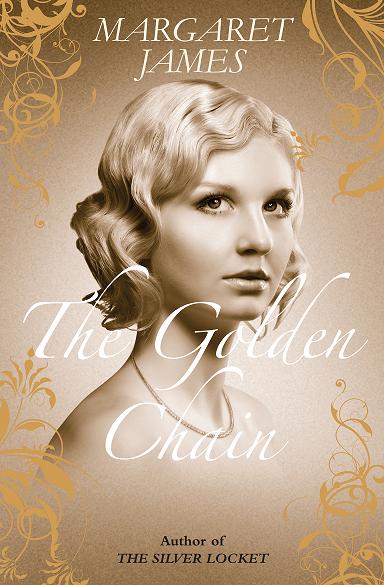
My novel The Silver Locket is a story set during WWI and was originally intended to be a one-off, ending when the hero married the heroine and they both lived happily ever after. But at the end of the story they adopted a child, and I found I just had to tell her story. So I wrote The Golden Chain, which is Daisy's story. At the end of The Golden Chain, Daisy's horrible little twin brothers are shaping up to become quite attractive young men, so they need to tell their story too.

In what way has the RNA helped you or your career?
If I'd never joined the RNA I'd never have become a published novelist - it's that simple. I've made so many friends, and met so many people who have generously given me good advice, rejoiced with me when things are going well, and bucked me up when things are going badly, in literature and in life. Also, the RNA gave me permission to be the writer I was meant to be. I did an English degree at London University, and sort of got the impression that if I couldn't be a great writer, there was no point in trying to be any sort of writer. The RNA assured me that writing stories which would hopefully entertain a few like-minded readers was worthwhile. I didn't have to try to change the world, or die of consumption when I was 25!

Do you enjoy research, and how do you set about it?
I love doing research, and I'm sure I spend far too long on it, rummaging around in the cellars of history and finding out all kinds of things I don't actually need to know for one particular story. As well as reading books, records, letters, and surfing the net for information, I like doing practical things and visiting the places where the events in my story happen. I'm interested in the history of the industrial revolution, and I enjoy wandering around the Black Country and South Wales, where it all got going. When I was writing a novel with an archaeological background, I got involved in an excavation.

I love the cover for your latest book. Tell us how you got the idea for it.
The Golden Chain is a sequel to The Silver Locket, both published by new independent Choc Lit. These two novels are radical reworkings of hardbacks published by Robert Hale some time ago.

In The Golden Chain, my heroine Daisy unconsciously follows in her unknown birth mother's footsteps, making a career on the stage. But she's also drawn back to her adoptive parents, who have a very different lifestyle in the Dorset countryside. Just to make matters a bit more complicated, Daisy falls in love with a cousin of her father's worst enemy, and then with a man who is even more unsuitable. She has a lot of decisions and choices to make, often makes the wrong ones, and she's quite good at breaking promises, too. Since this is romantic fiction, Daisy ends up in the place she wants to be, but not until she's done a lot of growing up.

What is the hardest part of the writing process for you?
Oh, that's easy - writing a first draft. I've got the road map, I've got the characters, I know roughly where they are going, but what about the journey? What if everyone gets bored and decides they want to go home? What if I realise I can't stand my heroine and don't love (or even like) my hero any more? It's happened, and when it does it induces three o'clock in the morning panics and much wailing. I hate having to abandon a story, but sometimes I just have to cut my losses, accept it's never going to get anywhere, and stick it somewhere almost inaccessible on my hard drive. I never throw anything away. I'm an eternal optimist, so I always feel I might, I just might, work out what do with those people one day. But when I think of the months and years of my life I've wasted writing stories that just don't work, when I could have been doing something absolutely fascinating like mucking out the utility room or working in B&Q, I could cry.

What advice would you give a new writer?
I can't think of anything more useful than the advice given by Jenny Haddon in a talk several years ago, which was - choose your rut carefully, because you'll probably be in it for a very long time. Although I've written published contemporary and suspense fiction, I've always chosen to write mainly historical fiction, which has turned out to be the ideal rut for me.

Also, I'd say - don't expect it to get easier, because it doesn't. So don't beat yourself up if you find writing your second, third or fourth novel harder than writing your first, because that's what happens. But there will be good times, too. When my writing is going well, I'm singing, I'm dancing, I'm flying, and for me that makes it all worth while.

As well as being a novelist, Margaret is a journalist working for the UK's Writing Magazine, and she teaches creative writing for the London School of Journalism. She was NWS Organiser for several years, and has had the great pleasure of seeing many of her NWS babies become hugely successful novelists. She's on Facebook and Twitter - and you can find out more about Margaret on her website at:
www.margaretjames.com
www.twitter.com/majanovelist
www.margaretjamesblog.blogspot.com

Amazon

Interviews on the RNA Blog are conducted by Freda Lightfoot and Kate Jackson. If you would like an interview, please contact me at: mailto:freda@fredalightfoot.co.uk